
January 4, 2021 was the day I truly said, “I don’t know,” out loud for the first time. It was my surrender to God, and it also is my sobriety date.
At first, “I don’t know” became the foundation of my faith. The posture of perhaps that could be true was the beginning of open-mindedness, the beginning of prayer to a God I didn’t believe in, couldn’t see, couldn’t feel, and didn’t understand.
Faith did not begin for me when I became certain about God, it began the day I admitted I wasn’t.
Whenever I remember to remain in that posture, life feels lighter. Anything that comes across my plate, I begin with the same quiet question: What if that’s true? Let me be open to it. Let me investigate. Let me make sure I don’t have contempt prior to investigation, prior to my own experience.
My husband’s surrender to God was also rooted in an “I don’t know.”
Twenty-five years ago, after a family intervention on Christmas Eve, he agreed to go to Hazelden, the premier clinical treatment center in Minnesota for alcoholism and drug addiction. When he completed his month there, he was transported to The Retreat, a residential facility with a more spiritual approach. Upon arriving, he was greeted by DJ, the spiritual director.
DJ asked Kevin if he had done Step Three, the step in which you surrender your life to God.
Kevin immediately pulled out his binder from clinical treatment, certain he had completed it.
DJ stopped him.
“No, it’s not paperwork. Have you gotten down on your knees and prayed with another alcoholic?”
DJ wasn’t asking about a worksheet. He wanted to know if Kevin had surrendered his life to God. Clearly, at that time, he had not, and he wasn’t sure he wanted to.
DJ asked Kevin to meet him downstairs at 5:30 that evening to pray together. Kevin nodded, signaling he’d be there, but internally he was quite sure he would not be coming downstairs to pray with this old man.
Upstairs, his roommate sat quietly on the bed as Kevin dropped his luggage and slipped his hand into his pocket to make sure his one-month medallion was still there. He looked up at the man, certain he wouldn’t yet have thirty days.
Kevin’s ego was in full swing. After all, he had just graduated from the premier treatment center in Minnesota.
“How many days you got?” Kevin asked.
The man looked confused. “Days for what?”
“Days sober? How many days away from drinking and drugs?”
“Oh,” he replied calmly, “two and a half years.”
Kevin paused, irritated by this unexpected loss in a silent contest no one else knew they were playing.
“Two and a half years? Then what are you doing here?”
The man looked up and simply said, “I had a gun in my mouth last week.”
Kevin turned, began unpacking, and decided he would meet DJ that evening to pray.
He had been quite sure knowledge would keep him sober, until he met a man who had tried that for two and a half years and found himself closer to death than before.
That day, Kevin realized he didn’t know.
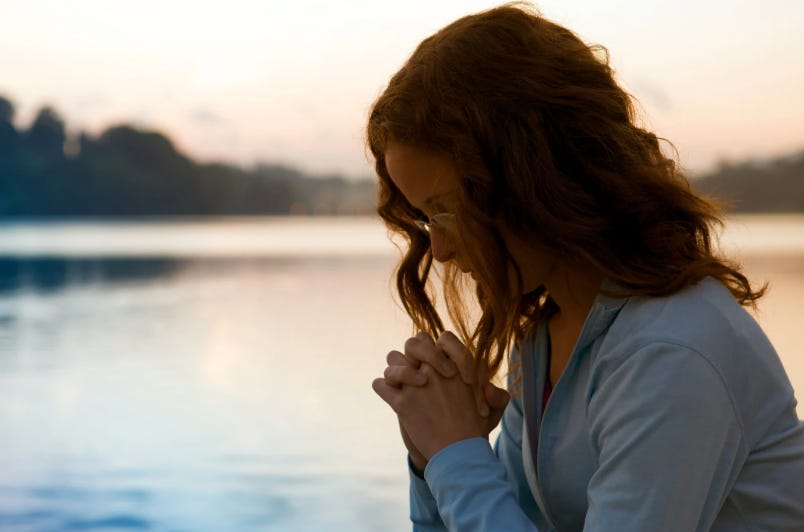
The same thing happened to me on January 4, 2021. I had tried sobriety through understanding, learning the inner workings of my neurobiology, convincing myself that insight alone could carry me. Yet, I remained anxious and confused.
The foundation of my faith became the willingness to say, “I don’t know, maybe I am wrong.”
Sometimes, I lose sight of that.
My relationship with God begins to spoil the moment I grip too tightly to being right, when I say, “I know this is how it should be”, instead of, “God, I am open, show me what is next.”
Over the last five years, I have felt myself pulled in different directions by well-meaning people of faith. At times I leaned conservative, believing proximity to God could be measured by rule-following. At other times I listened too closely to progressive voices and found myself drafted into battles that did little to deepen my love.
I used to think I knew a lot.
What I see more clearly now is this: the illusion of certainty has always been my spiritual blind spot. The second I convince myself there is only one right way to live, I drift from the very humility that faith requires.
As I began writing this essay, I glanced at my nightstand and could almost hear God saying, “Open your Bible”.
I resisted. I wanted this essay to be about my experience, not shaped by a passage. The irony of believing I knew what my essay about letting go of knowing should be based on was not lost on me.
So, I opened my Bible, and these were the first words I saw:
“You therefore have no defense — you who sit in judgment, whoever you may be — for in judging your fellow man you condemn yourself, since you, the judge, are equally guilty.” It’s the opening of Romans 2.
Whether it is my neighbor, my city, or the state of the world, every time I appoint myself the architect of how things should be, I drift further from God.
I don’t know the motivations of every person.
I don’t know God’s long-term plan.
Reading Genesis lately has reminded me how often things unravel when people force their own outcomes, and how different life becomes when they simply ask for guidance for the next step.
Our world feels impossibly complicated at times, but I am learning that my job is not to solve the world. My job is to do the next thing God has placed in front of me.
Sweeping opinions rarely help me do that. More often than not, they create distance where love is meant to live.
I have let the pendulum of my convictions swing many times over the last five years. Recently, it has become clear that neither extreme is where God is calling me.
I am not here to fight or judge, and certainly not in comment sections or across the internet.
I am here to love and serve the people directly in front of me.
Surrender rarely begins with understanding. It begins the way it did for me in 2021 and for Kevin at The Retreat, in the quiet recognition that knowledge alone cannot save us.
When I live this way, I know who I am, and the rest of life seems to settle into place. But, when I am swayed by the noise of the world or the confidence of opinionated voices, everything feels unstable.
I am at my best when I can approach each situation with open hands rather than clenched certainty.
I listen better.
I love better.
I serve better.
And in my own small corner of the world, which is all I am responsible for, life can feel steady, no matter what the world insists is true.
The older I get, the more I suspect that the most important words I will ever speak are still these: “I don’t know”.
Also, if you’re new here, I’m Dr. Lisa Stanton, and I want to welcome you to my writing home.
A bit about me: I write and teach about faith, recovery (not just from addiction, also mental health, physical illness, the need for control…just about anything), and the process of unlearning the things that keep us from peace.
My publication is called The Unlearning Gazette, and my emails are simple: stories, reflections, and reminders that God hasn’t gone anywhere, even when life feels heavy or confusing.
So, welcome, or hello, it’s great to see you again!